For most first-time flashlight buyers, professional terms like lumens, IPX rating, 18650 battery, and cool white light on product pages can be overwhelming. Faced with a huge selection of options, many either blindly splurge on a “high-end model” or pick a cheap basic one at random—only to end up with a flashlight that’s ill-suited for their needs or a letdown in real use, wasting money in the process.
In reality, flashlight core specs are not complicated at all. You don’t need to memorize them by heart. Just focus on 5 key factors: Lumens, Water Resistance Rating, Battery Type, Light Source Type, and Material & Portability. Pair these specs with your actual usage scenarios, and you’ll avoid 90% of buying mistakes. Even total beginners can find a cost-effective, easy-to-use flashlight. This guide will walk you through each spec step by step, turning you from a flashlight novice into a savvy buyer.
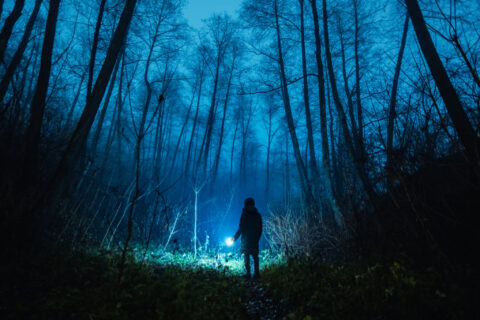
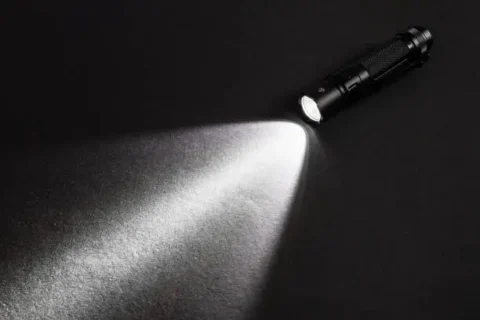
Main Image: Beginner’s Flashlight Buying Guide – 5 Core Specs
(Image Description: Minimalist educational design. Left side labeled “5 Core Specs for Confident Buying”. Right side features real-life shots of an EDC flashlight and an outdoor flashlight. Bottom text: “Zero-Mistake Buying Guide for Beginners”)
1. Lumens: Determines Brightness, But Higher Isn’t Always Better
Core Definition
A lumen (lm) is the primary unit for measuring a flashlight’s actual brightness output. Simply put, the higher the lumen count, the brighter the light and the wider the illumination range. However, the biggest mistake beginners make is the “lumen obsession”—thinking more lumens equal a better flashlight. In truth, excessively high lumens are not only impractical but also come with a host of issues.
Scenario-Based Lumen Recommendations
Choosing the right lumen count all boils down to matching your usage scenario. Brightness needs vary drastically across different situations, and precise selection is the key to balancing practicality and battery life:
- Everyday EDC (Everyday Carry) (commuting, picking up packages, night walks, indoor emergencies): 300–1000 lumens is more than enough. This brightness clearly illuminates 5–15 meters ahead with soft, non-glaring light. It meets all daily lighting needs without over-consuming power, ensuring longer battery life, and the compact body easily fits in a pocket.
- Basic Outdoor Use (suburban hiking, park camping, night fishing): 1000–2500 lumens is ideal. It lights up 20–30 meters of path ahead, handling wooded trails and camp surroundings with ease. It strikes a perfect balance between brightness and battery life, so you won’t run out of power mid-adventure from keeping it on high beam the whole time.
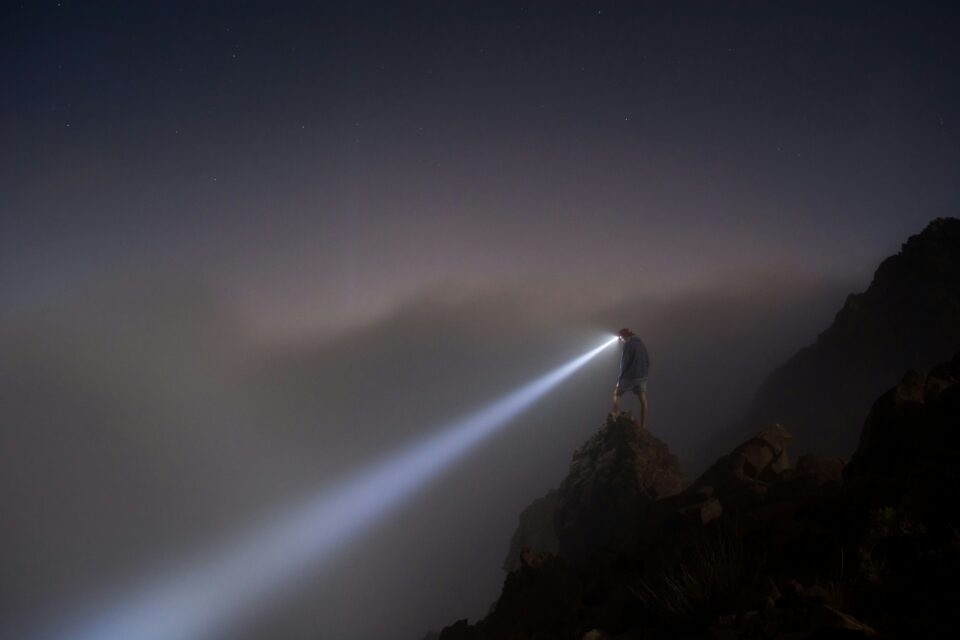
- Professional Outdoor Use (long-distance backcountry trips, mountain hiking, search & rescue): 2500+ lumens. Ultra-high brightness illuminates over 50 meters ahead and even cuts through thick fog and complete darkness, making it perfect for complex outdoor terrain. Note that these flashlights are typically larger and heavier, so they’re not suitable for daily carry.
Beginner’s Red Flag
Beware of false lumen claims from low-quality brands! Some off-brand flashlights label 5000lm or 8000lm, but their actual measured brightness is less than half the stated number. Always choose reputable brands and check for third-party lab test data—don’t be fooled by exaggerated numbers.
Comparison Chart: Flashlight Lumen Output in Real Scenarios

2. Water Resistance Rating: Stick to the IPX Standard, Choose Based on Needs
Core Definition
Flashlight water resistance ratings all start with the prefix IPX (IP = Ingress Protection; X denotes dust resistance, and the number after represents water resistance). When buying, focus on the second digit—the higher the number, the better the water resistance and the more wet/watery scenarios the flashlight can handle.
Water Resistance Capabilities & Scenario Recommendations by Rating
IPX ratings have clear scenario boundaries. There’s no need to blindly chase the highest rating, which only adds unnecessary weight and cost. Choose based on how you’ll use the flashlight:
- IPX4: Basic Daily Water Resistance (splash-resistant): Defends against accidental splashes from handwashing, rainy commutes, and light sprays. Ideal for EDC flashlights used only indoors or in urban areas, meeting basic water protection needs.
- IPX5: Water-Jet Resistant: Withstands high-pressure water jets from all angles, such as heavy rain during outdoor walks or splashes from car washing. Great for flashlights used occasionally outdoors.
- IPX6: Powerful Water-Jet Resistant: Handles intense high-pressure water jets—even heavy downpours and muddy splashes won’t affect performance. This is the baseline standard for outdoor flashlights, perfect for suburban hiking and camping.
- IPX7: Temporary Submersion Resistant: Can be submerged in 1 meter of water for 30 minutes without water ingress. Suitable for water-adjacent outdoor activities like stream trekking and rafting.
- IPX8: Continuous Submersion Resistant: Can stay submerged in more than 1 meter of water for extended periods. Designed for professional use like diving and underwater work—completely unnecessary for daily or casual outdoor use.
Practical Tip
Water-resistant flashlights are not 100% waterproof forever. After exposure to water or mud, wipe the body dry immediately—especially the seals around charging ports and battery compartments—to prevent aging of rubber gaskets and reduced water resistance. If a flashlight does get water inside, turn it off, remove the battery, and let it air dry completely before use to avoid short circuits and damage.
Infographic: IPX Water Resistance Rating Test Demonstration
(Image Description: Step-by-step display of IPX4 to IPX8 water resistance tests, from splash resistance to deep-water submersion. Each rating labels applicable scenarios and features real test photos for easy understanding.)
3. Battery Type: Balance Convenience and Battery Life, Choose by Usage Habits
A flashlight’s battery is its power source, directly impacting battery life and usability. Currently, mainstream flashlight batteries fall into two categories: rechargeable lithium-ion batteries and disposable alkaline batteries. Each has pros and cons—there’s no “best” type, only the one that fits your usage habits.
Type 1: Rechargeable Lithium-Ion Batteries (Mainstream Recommendation, Best for Daily Use)
Common Models
18650, 21700 (high-capacity), and built-in Type-C lithium-ion batteries (compact models). These are the most popular battery types for modern flashlights, especially those with Type-C fast charging.
Core Advantages
- Eco-friendly & Cost-effective: Rechargeable hundreds of times, with a far lower long-term cost than disposable batteries—aligning with green living principles.
- Convenient Charging: Type-C fast-charging ports are compatible with the same cables as smartphones and tablets. Charge anytime at the office, at home, or in the car—no extra charger needed, eliminating the hassle of hunting for a specific cable.
- Stable Battery Life: Lithium-ion batteries from reputable brands have accurate capacity labeling and consistent performance, with no sudden power drops.
Applicable Scenarios
Everyday EDC, indoor emergencies, casual outdoor use (with charging access), and stationary use (e.g., home, construction sites).
Type 2: Disposable Alkaline Batteries (Best for Emergencies, Essential for Long-Distance Trips)
Common Models
AA (LR6) and AAA (LR03) batteries— the most widely available disposable batteries, found in supermarkets and convenience stores worldwide.
Core Advantages
- Unbeatable Emergency Readiness: No charging required—simply replace with new batteries for instant use. Perfect for long-distance backcountry trips and travel to remote areas, eliminating power anxiety entirely.
- Long Shelf Life: Unopened alkaline batteries can be stored for years, making them ideal for emergency flashlights with no risk of power drain during long-term storage.
Limitations
Higher long-term cost and less eco-friendly. Some off-brand alkaline batteries have false capacity claims with inconsistent performance.
Applicable Scenarios
Long-distance backcountry trips (no charging access), emergency backup flashlights, and temporary use flashlights.
Buying Recommendation
For daily use, prioritize flashlights with Type-C fast-charging lithium-ion batteries for unbeatable convenience and savings. If you frequently go on long-distance outdoor adventures, choose a dual-power supply flashlight (lithium-ion + alkaline compatible) to balance daily convenience and outdoor emergency readiness— the best of both worlds.
Comparison Chart: Mainstream Flashlight Battery Types
(Image Description: Left side features a 18650 lithium-ion battery + Type-C port with labels: “Eco-friendly, Cost-effective, Convenient Charging”. Right side shows AA/AAA alkaline batteries with labels: “Ultimate Emergency Readiness, Widely Available”. Bottom features a dual-power supply flashlight with label: “For Daily Use & Outdoor Adventures”.)
4. Light Source Type: White Light as the Base, Multi-Functional Light Sources for Extra Utility
Core Definition
A flashlight’s light source determines the light’s color, color temperature, and applicable scenarios. Current flashlight light sources fall into two main categories: basic single-color light sources and multi-functional composite light sources. White light, as the foundational source, meets 90% of lighting needs, while multi-functional sources unlock more use cases—turning one flashlight into multiple tools.
Features & Practical Uses of Each Light Source Type
Basic Light Source: White Light (Essential, Universal Use)
White light is the core of any flashlight and is further divided into cool white light and warm white light based on color temperature, each suited for different scenarios:
- Cool White Light (5000K–7000K): Bright, crisp white light with strong penetration. Perfect for scenarios requiring clear illumination like night hiking, equipment maintenance, and outdoor navigation.
- Warm White Light (3000K–4500K): Soft, yellowish light that’s non-glaring and gentle on the eyes. Ideal for close-range lighting like camp illumination, indoor reading, and night bathroom trips.
Multi-Functional Light Sources: Unlock More Scenarios (Bonus, Choose Based on Needs)
With advances in flashlight technology, more models now include red light, UV ultraviolet light, and RGB ambient light—dramatically boosting practicality. Each multi-functional light source serves a unique purpose:
- Red Light: Its biggest advantage is that it preserves human night vision. After use, your eyes don’t need to re-adapt to darkness, making it perfect for outdoor night navigation and stargazing. Red light also has strong penetration, acting as a warning signal in fog or rain—hikers who get separated can turn on red light for easy identification by companions.
- UV Ultraviolet Light: A practical daily tool. Use it to verify banknotes and fluorescent markings (avoid counterfeits), detect hidden leaks in air conditioners and water pipes with fluorescent dye, and even spot fluorescent plants and animals outdoors—adding fun to outdoor adventures.
- RGB Ambient Light: Transforms the flashlight from a “tool” to a “lifestyle accessory”. Open it while camping to create a cozy or stylish camp atmosphere; use it as a photo fill light for gatherings with friends; or as a desktop night light at home to add a touch of warmth to daily life.
Buying Recommendation
If you only need basic illumination, a single white light flashlight is sufficient and offers better value for money. If you want versatility and multi-use functionality, choose a composite light source flashlight (white + red + UV)—it works for both daily use and outdoor adventures, eliminating the need to carry multiple tools.
Showcase: Multi-Functional Flashlight Light Source Effects
(Image Description: 4-grid layout featuring real-life shots of cool white light (outdoor hiking), warm white light (camp illumination), red light (night navigation), and UV light (banknote verification & leak detection). Each grid labels the core advantage and applicable scenario of the light source.)
5. Material & Portability: Grip and Carry Comfort Are Non-Negotiable
A flashlight’s material directly determines its durability, weight, and grip feel, while portability dictates whether it can be carried with you at all times. This is especially true for EDC flashlights—portability and grip are the top considerations. A great flashlight will end up unused if it’s a hassle to carry.
Mainstream Materials & Their Features
Flashlights are primarily made from metal or engineering plastic, each suited for different scenarios with distinct grip and durability levels:
- Aircraft-Grade Aluminum (6061/6063): The mainstream choice for flashlights. It balances light weight and durability—light, high-hardness, shock and wear-resistant, and excellent at heat dissipation. Non-slip textures and anodized finishes on the body enhance grip and prevent slipping from sweaty palms. Perfect for daily EDC and outdoor use, it’s the optimal choice for balancing practicality and portability.
- Heavy-Duty Metal (Stainless Steel/Titanium Alloy): Extremely high hardness and shock resistance, able to withstand severe drops and impacts. Ideal for professional outdoor adventures and construction sites—but the heavier body makes it unsuitable for daily carry.
- Engineering Plastic (ABS/PC): Ultra-light and affordable with good dust and water resistance. Perfect for kids, the elderly, or as an emergency backup flashlight. Note that it’s less durable and should be protected from severe impacts.
Core Portability Standards
Portability means “easy to carry, no burden”, and requirements vary by scenario:
- Everyday EDC Flashlights: Keep the body within 10cm in length and under 50g in weight. It should slide easily into a jeans pocket, bag side pocket, or even attach to a keychain—ensuring it’s always within reach and ready to use.
- Outdoor Flashlights: No need to overemphasize compactness. A body 10–20cm in length and 80–200g in weight strikes a balance between grip and portability, fitting easily in a camping or hiking bag. Prioritize ergonomic non-slip handles and balanced weight distribution to avoid hand fatigue during extended use.
Small Buying Details
Pay close attention to handle texture and tail design: Deeper, denser non-slip textures ensure a firm grip with sweaty palms. Flashlights with a magnetic base or built-in stand can attach to metal surfaces (e.g., cars, fridges) or stand on flat surfaces—freeing up your hands for added convenience.
Comparison Chart: Flashlight Material & Portability
(Image Description: Left side features an EDC flashlight (aircraft-grade aluminum, keychain model) with labeled dimensions and weight. Right side shows an outdoor flashlight (heavy-duty aircraft-grade aluminum, non-slip handle) with labeled grip comfort and applicable scenarios. Middle features a drop test comparison of different materials to demonstrate durability differences.)
The Ultimate Beginner’s Flashlight Buying Guide: Avoid These Mistakes
Once you understand the 5 core specs, remember these 3 golden rules for zero-mistake buying:
1. Don’t Blindly Stack Specs—Matching Your Scenario Is Everything
The most expensive flashlight isn’t always the best. A “top-of-the-line model” with ultra-high lumens, maximum water resistance, and all light sources is overkill for daily commuting—it only adds cost and sacrifices portability. Choosing specs based on your primary usage scenario is the most rational decision.
2. Prioritize Reputable Brands—Avoid Cheap Off-Brands
Off-brand flashlights often suffer from false spec labeling, low-quality materials, and shoddy craftsmanship. Not only is the user experience poor, but there are also safety risks like battery swelling and short circuits. Always choose well-reviewed brands with warranty coverage. While the upfront cost may be slightly higher, you’ll get guaranteed quality and safety—most reputable brands offer 7-day free returns and 1-year warranties for peace of mind.
3. Value Actual Grip Feel—Test In-Store or Check Customer Reviews
Flashlight grip can’t be judged from a picture. If there’s a physical store nearby, hold the flashlight to test the feel. If shopping online, focus on customer photos and real user reviews—pay attention to comments about grip, weight, and switch sensitivity to avoid buying a flashlight that looks great but feels terrible to use.
Final Summary
Don’t be intimidated by professional flashlight terms. The key to confident buying is focusing on 5 core specs: Lumens, Water Resistance Rating, Battery Type, Light Source Type, and Material & Portability. Avoid the pitfalls of “lumen obsession” and “blindly buying high-end”, and choose based on your actual usage scenarios:
- Daily Commuting/EDC: 300–1000lm + IPX4 + Type-C fast-charging lithium-ion + compact aircraft-grade aluminum flashlight
- Outdoor Camping/Hiking: 1000–2500lm + IPX6 + rechargeable lithium-ion + multi-functional light source flashlight
- Professional Outdoor/Search & Rescue: 2500+lm + IPX7 + dual-power supply + heavy-duty metal flashlight
At the end of the day, a flashlight is just a lighting tool that should fit your needs and feel good to use. When matched to your scenario, even a basic model will deliver maximum value—giving you reliable lighting for peace of mind in the dark.
Cheat Sheet: Scenario-Based Flashlight Buying Recommendations
(Image Description: Tabular layout with 3 columns: “Usage Scenario”, “Core Spec Recommendations”, and “Flashlight Type”. Clearly lists precise buying options for EDC, outdoor camping, professional outdoor, and emergency home use—easy for beginners to save and reference.)