Choosing the right flashlight brightness (measured in lumens) is more than just picking the highest number on the package—it’s about matching light output to your exact needs. Too little brightness leaves you squinting in the dark; too much wastes battery, causes glare, and even risks discomfort or danger. Whether you’re shopping for an EDC flashlight, camping light, or emergency tool, this step-by-step guide will help you calculate the perfect lumens for your use case, avoid common mistakes, and get the most value from your purchase.
Unlike generic brightness charts, this guide walks you through customized decision-making: from defining how and where you’ll use the flashlight to balancing brightness with battery life and beam performance. By the end, you’ll know exactly what lumen range to look for—no more guesswork or overspending on unnecessary power.
Main Image: How to Choose Flashlight Brightness Step-by-Step
(Image Description: Step-by-step infographic-style design. Center shows a flowchart: Define Use Case → Match Lumens → Check Beam Type → Balance Battery Life. Surrounding images: EDC, camping, and emergency scenarios with corresponding lumen numbers. Bottom text: “Find Your Perfect Brightness in 5 Simple Steps”)
Step 1: Define Your Primary Use Case (The Most Critical Step)
Brightness needs vary drastically by how you use your flashlight. Start here—this eliminates 90% of the guesswork. Ask yourself two key questions: Where will I use it most? and What will I use it for? Below are the most common use cases and their baseline lumen needs to guide you.
- Everyday Carry (EDC) & Daily Tasks:
- Use Cases: Unlocking doors, finding items in bags/purses, walking dogs, navigating parking lots, minor home repairs.
- Key Requirement: Compact, low-glare, long battery life (no need for extreme brightness).
- Baseline Lumens: 200–800lm (stick to 200–500lm for most daily tasks).
- Outdoor Recreation (Camping, Hiking, Fishing):
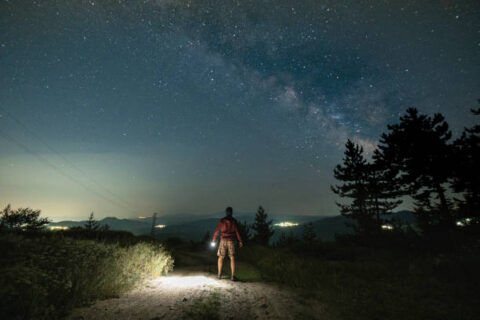
- Use Cases: Trail navigation, campsite lighting, bait prep, walking at dawn/dusk, signaling fellow adventurers.
- Key Requirement: Versatile (adjustable brightness), balanced beam (spot for distance, flood for coverage).
- Baseline Lumens: 800–2500lm (low for campsites, high for trail navigation).
- Backcountry & Professional Use (Search, Hunting, Security):
- Use Cases: Searching for lost gear/people, hunting at night, security patrols, remote trail navigation.
- Key Requirement: High sustained brightness, long beam distance, durable build.
- Baseline Lumens: 2500–5000lm (prioritize sustained output over max lumens).
- Home & Emergency Use (Power Outages, Basement/Attic Checks):
- Use Cases: Lighting rooms during blackouts, inspecting dark spaces, emergency signaling.
- Key Requirement: Wide coverage (flood beam), reliable battery, gentle on eyes.
- Baseline Lumens: 300–1000lm (avoid over 1000lm for indoor use—glare is counterproductive).
Step 2: Adjust for Environment (Brightness Isn’t One-Size-Fits-All)
Even within the same use case, your environment changes how much brightness you need. Dim, enclosed spaces require less light; open, dark areas need more. Adjust your lumen range based on these factors:
- Lighting Conditions:
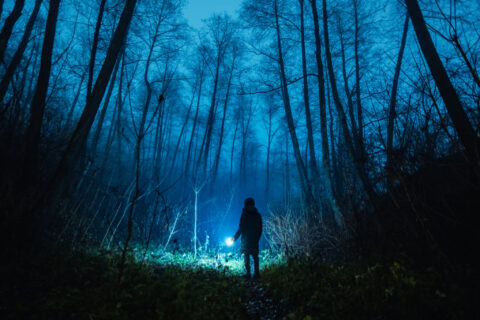
- Low-Light Environments (wooded trails, basements): Stick to the higher end of your use case’s lumen range (e.g., 500–800lm for EDC in dense woods).
- Moderate-Light Environments (suburban sidewalks, lit campsites): Use the lower end (e.g., 200–300lm for EDC in lit areas).
- Weather:
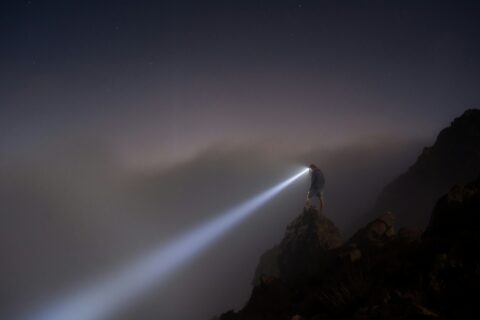
- Fog/Rain/Snow: Add 20–30% more lumens (e.g., 1000–1200lm instead of 800lm for camping in fog)—moisture scatters light, reducing effective brightness.
- Clear Nights: Stick to the baseline (no need for extra lumens).
- Distance Needs:
- Close-Range Tasks (reading, campsite prep): Lower lumens (300–500lm) + flood beam.
- Long-Range Tasks (trail navigation, searching): Higher lumens (1500+lm) + spot beam.
Step 3: Match Brightness to Beam Type (Critical for Real-World Performance)
Lumens alone don’t determine how useful your flashlight is—beam type (spot vs. flood) directly impacts how light is distributed. A mismatched beam and lumen combination will leave you frustrated, even with the “right” brightness.
- Spot Beam + High Lumens (1500+lm): Ideal for long-distance tasks (trail navigation, searching). The focused beam concentrates light, so high lumens translate to far-reaching, usable light.
- Spot Beam + Low Lumens (200–800lm): Good for short-to-medium distance (50–100 meters) but not powerful enough for dark, open areas.
- Flood Beam + High Lumens (1000+lm): Wastes battery—wide beams spread light too thin, so high lumens don’t add value (they just cause glare).
- Flood Beam + Low-to-Medium Lumens (300–1000lm): Perfect for close-range, wide-coverage tasks (campsites, indoor emergencies).
Pro Tip: Choose an adjustable (hybrid) beam flashlight for versatility—swap between spot and flood to match your brightness and task.
Step 4: Balance Brightness with Battery Life (Avoid Power Anxiety)
Higher lumens = shorter battery life—this is non-negotiable. Don’t sacrifice runtime for unnecessary brightness; calculate how long you’ll need the flashlight to run, then adjust your lumen choice accordingly.
- Short Runtime Needs (1–2 hours): You can opt for higher lumens (2000+lm) if needed (e.g., short night hikes).
- Long Runtime Needs (4+ hours): Stick to lower-to-medium lumens (500–1500lm) or choose a dual-power flashlight (rechargeable + disposable batteries) for backup.
- Key Check: Look for “sustained runtime” specs (not just max lumens). A flashlight that claims 5000lm but only runs for 30 minutes on high is useless for long trips.
Image: Brightness vs. Battery Life Comparison
(Image Description: Bar chart showing runtime for different lumen settings: 300lm (12 hours), 1000lm (6 hours), 2000lm (2 hours), 5000lm (30 minutes). Label with “Choose Lumens Based on How Long You Need It to Run”.)
Step 5: Avoid Common Brightness Mistakes (Save Money & Frustration)
Most people get brightness wrong because of marketing hype—here are the top mistakes to skip:
- Mistake 1: Chasing Max Lumens: A 10,000lm flashlight is overkill for 99% of users. It overheats, drains batteries in minutes, and blinds others (or yourself) in close quarters.
- Mistake 2: Ignoring Sustained Lumens: Many flashlights drop to 50% brightness after 10 minutes (to prevent overheating). Always check sustained output—this is the real brightness you’ll use.
- Mistake 3: Forgetting Glare: Too much brightness in enclosed spaces (cars, homes) causes glare, making it harder to see. Stick to 300–500lm for indoor use.
- Mistake 4: Neglecting Beam Distance: A 1000lm flood beam won’t reach 50 meters, but a 800lm spot beam will. Prioritize beam distance over lumens for long-range tasks.
Quick Reference: Brightness Selection Cheat Sheet
Save this chart for fast shopping—match your use case to the ideal lumen range and beam type:
| Use Case | Ideal Lumens | Beam Type | Runtime Tip |
|---|---|---|---|
| EDC/Daily Tasks | 200–800lm | Flood/Hybrid | Stick to 200–500lm for all-day battery |
| Camping/Hiking | 800–2500lm | Hybrid | Use low mode (300–500lm) for campsites |
| Backcountry/Search | 2500–5000lm | Spot/Hybrid | Bring backup batteries |
| Home/Emergencies | 300–1000lm | Flood | Prioritize long runtime over max lumens |
Final Step: Test Before You Buy (If Possible)
If you’re shopping in-store, test the flashlight in a dark area to verify brightness: Turn it on to your desired mode (match your use case).Check for glare (if it’s too bright to look at indirectly, it’s too powerful).Test beam distance (walk 50–100 meters away—does the light stay useful?).
For online purchases, read user reviews about real-world brightness and runtime—avoid brands that overstate specs.
Conclusion
Choosing flashlight brightness isn’t about picking the highest number—it’s about customizing to your use case, environment, and battery needs. By following these steps, you’ll avoid overspending on unnecessary lumens and find a flashlight that’s bright enough to be useful, but not so bright that it’s wasteful or dangerous.
Remember: The best brightness is the one that fits how you use your flashlight. A 300lm EDC flashlight is better than a 5000lm model if it’s more portable, has longer battery life, and matches your daily tasks. Use this guide to cut through the marketing noise and make a confident choice.